Fences do real work on a Montana ranch. They hold livestock, mark boundaries, protect investments, and have to survive frost, wind, snow load, rock, and the occasional bull with an opinion. These are the four fence types Montana ranchers rely on most, how they compare to the other options, and how to choose between them.
The short answer: use welded pipe where pressure is highest, barbed wire or field fence to cover distance, and jackleg where the ground is rocky, frozen, or the fence needs to look like Montana. Most ranches use two or three of these together.
1. Pipe Fencing
Oil field pipe fence is drill-stem pipe welded on site. It’s durable beyond argument, holds livestock in without blocking your view of them, and costs far less than new structural steel because the pipe is repurposed.
- Best for: corrals, working pens, pressure corners, heavy-duty boundaries and entrances
- Livestock: excellent, nearly indestructible
- Terrain: any; it’s welded to fit the ground
- Maintenance: very low
2. Barbed Wire Fencing
The fence that settled the West still earns its keep. Barbed wire gives reliable cattle containment at a low cost per mile, lasts decades with basic maintenance, and handles Montana’s distances like nothing else. The quality is in the posts, the bracing and the tension, not the wire itself. It’s the wrong choice for horses and some wildlife corridors; our guide on where barbed wire fits and where it doesn’t covers the alternatives.
- Best for: long cattle perimeters and pasture divisions
- Watch for: horses, which are better behind no-climb, board or panel
3. Jackleg Fencing
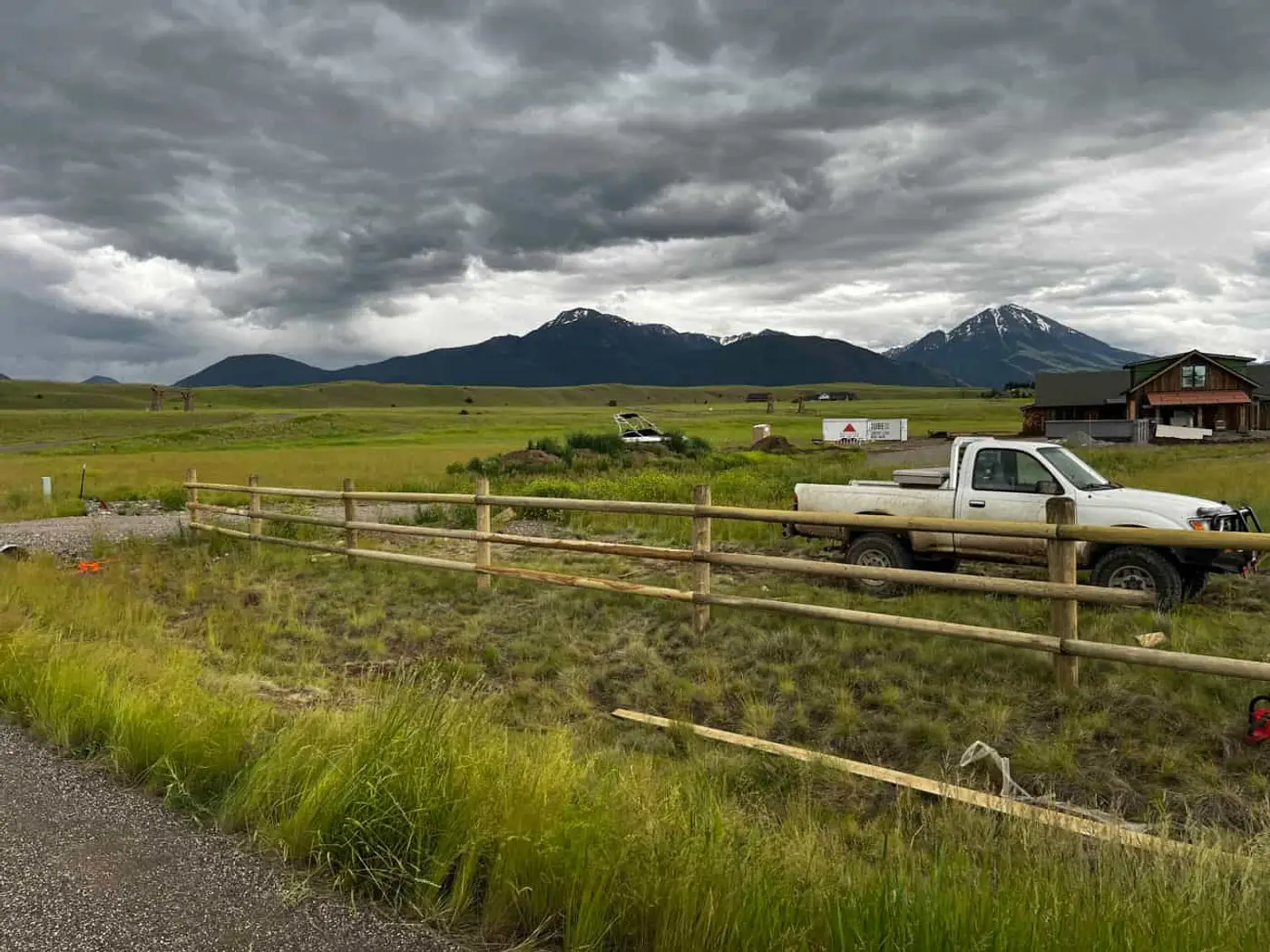
Montana’s signature fence. Jackleg (buck-and-rail) rests on crossed-leg bucks instead of set posts, so it needs no post holes. That means it goes up over rock, shallow soil, river bottoms and frozen ground, and it can be built in winter when set-post fencing waits for the thaw. Choose bark-on for character or treated for the longest life.
- Best for: boundaries on rock or frozen ground, rustic ranches, scenic frontage
- Livestock: cattle and horses; add wire for smaller stock
- Maintenance: low to moderate
Not sure whether you want jackleg or split rail? See Jackleg vs. Split Rail.
4. Field Fencing
Woven-wire field fence is the livestock workhorse. It contains cattle, sheep and goats, keeps predators out, and covers distance economically. Stretched tight on well-set, well-braced posts, it quietly does its job for decades.
- Best for: working ranches and mixed-livestock pastures
- Livestock: excellent for cattle, sheep, goats and horses
- Maintenance: low
How They Compare to the Other Options
The four above do most of the work on Montana ranches, but they aren’t the only choices. Here’s how the full lineup compares:
| Fence | Best for | Livestock | Terrain | Maintenance |
|---|---|---|---|---|
| Jackleg | Rocky or frozen ground, rustic ranches | Cattle and horses | Excellent: no post holes | Low to moderate |
| Split rail | Property lines, decorative boundaries | Light; pair with wire | Good on rolling ground | Low |
| Field fence | Working ranches, mixed livestock | Excellent | Good; set posts | Low |
| No-climb | Horse properties, dogs, gardens | Safest for horses | Good; set posts | Low |
| Ranch board | Horse properties, curb appeal | Horses and cattle | Best on even ground | Moderate (stain or paint) |
| Continuous panel | Corrals, working pens | Excellent | Panels follow the ground | Very low |
| Oil field pipe | Corrals, heavy-duty lines, entrances | Nearly indestructible | Any; welded on site | Very low |
| Cedar privacy | Privacy near the house | Not a livestock fence | Must be built for wind | Low to moderate |
The fencing overview has the same comparison with photos of each type.
How to Choose the Right Fence
Start with what the fence is for
The use should drive everything else:
- Containing cattle: field fence or barbed wire, with pipe at pressure points
- Horses: no-climb mesh, board fence, or continuous panel
- Boundary marking: split rail or jackleg for looks and clarity
- Privacy: cedar privacy fence
- Working pens: welded steel
Decide how long it needs to last
Welded pipe effectively never wears out, treated wood serves for decades, and untreated soft woods weather fastest. Perimeter and working fences deserve the durable end of the range; decorative interior lines can flex.
Read the ground
Montana ground has opinions. Rock ledge and shallow soil fight set posts, and jackleg sits on top of them. Frost heave pushes posts up over the years; depth and drainage counter it (see How Fence Posts Are Set and frost depth for footings). Steep grades, river crossings and drift zones each have right answers, and corners and braces are where most fences fail first: why fence corners and braces fail.
Compare cost over the life of the fence
Cost per foot varies widely, and the cheapest fence per foot is rarely the cheapest per year of service. Wire is economical at distance, wood balances cost and looks, and steel costs most up front and least over the long run. The way to compare honestly is to get your actual lines measured and priced in two or three fence types, then decide. For what drives those numbers, see What Affects Ranch Project Costs in Montana?
Plan the whole system
The right answer is usually a combination: steel where pressure is highest, wire at distance, rail where looks matter. Planning gates, corners and wildlife crossings at the same time saves rework. Our 9 questions to answer before planning a ranch fence walk through it.
Get a Recommendation, Not a Sales Pitch
We build every fence type on this page, so we don’t need to steer you toward the one thing we sell. Tell us the job, walk the line with us, and we’ll tell you honestly what fits where. Free estimates and measurements, or call (406) 551-6772.