An older ranch has good bones and a lot of deferred work. Leaning fence, a road that rattles your teeth, a barn nobody should walk into, brush creeping over everything. The work gets far easier, and the money goes further, when you do it in the right order.
The short answer: clear the hazards and clutter first, fix the access, then restore the fences, and save buildings, repairs and the entrance for last. Each step makes the next one cheaper and easier.
1. Remove Old or Failing Structures
Structure demolition is often the fastest way to change how an aging property looks and works. Dilapidated sheds and barns aren’t just eyesores; they’re genuine hazards and liability risks. Taking them down safely recovers ground for something useful, removes the danger, and often yields salvageable barn wood worth keeping. For what’s involved on rural sites, see rural demolition, site cleanup and preparation.
2. Clear the Land
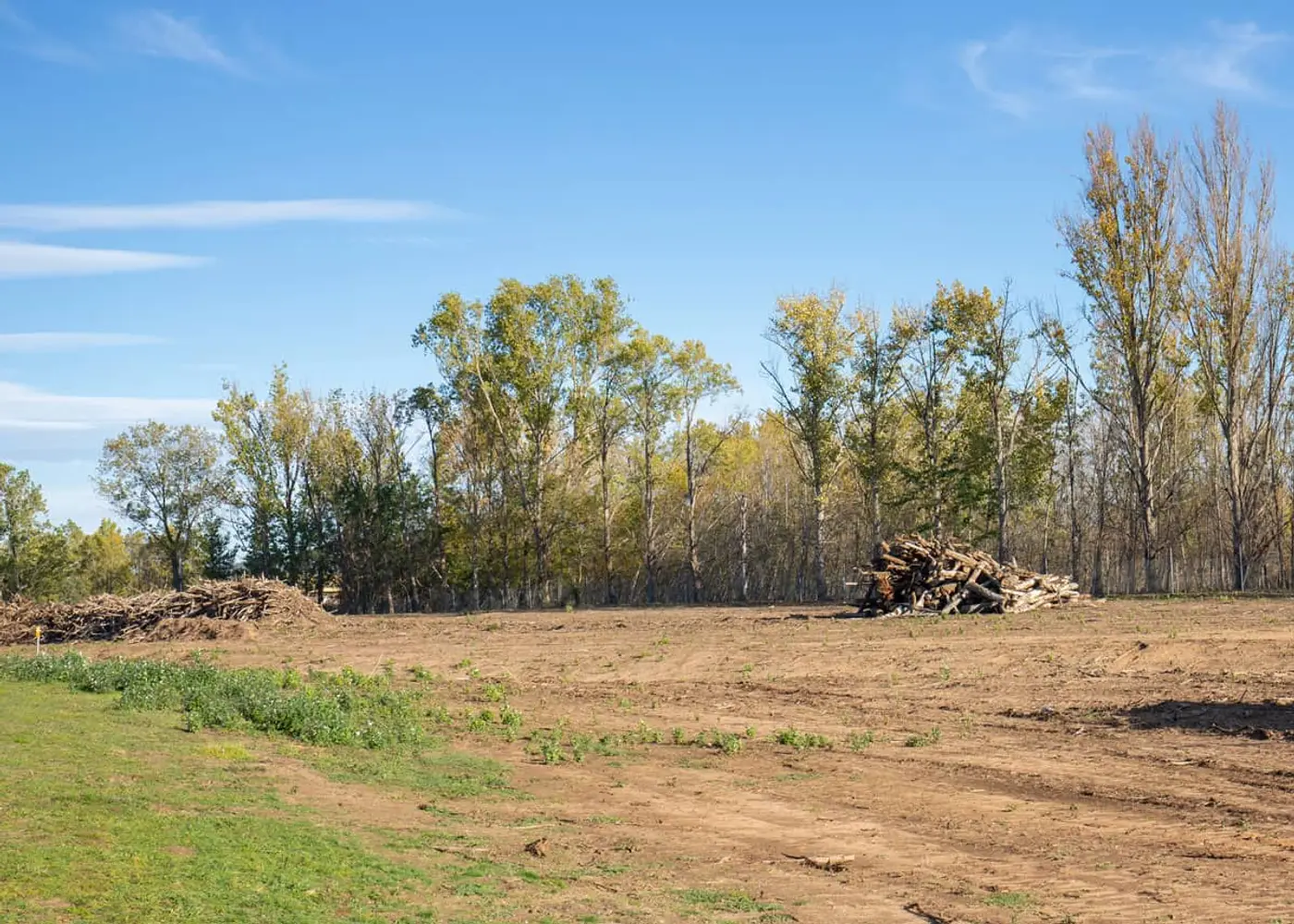
Land clearing is the highest-impact step on most tired properties: fallen trees, brush encroachment, the remains of old projects and decades of accumulation all come off, leaving usable, presentable ground. It also opens up the property so you can actually see what the next projects should be. More on that in improving a new property with land clearing.
3. Fix the Access
Old ranches usually have old roads. Grading, drainage repair and fresh surfacing turn a washboard approach into a proper driveway, and better access raises both daily quality of life and property value. Because crews and materials have to come in on that road for every later project, fixing it early pays twice. For deciding how much a failing road needs, see ranch road repair vs. reconstruction.
4. Restore the Fences
Nothing says “neglected” like leaning posts and slack wire. Replace the failed sections rather than patching them, and consider where an upgrade earns its keep: jackleg or board fence where the fence shows, field fence or steel where it works. Cross-fencing for grazing management can come in at the same time. Not sure which fence goes where? Start with 4 Types of Fencing Montana Ranchers Love.
5. Buildings and Shelters
Ranches run on structures: barns, hay sheds, livestock shelters and equipment cover. Montana buildings have to stand up to snow load and wind, and to the livestock that use them, which test a building almost as hard as the weather does. Pole barns and lean-to additions are often the fastest, most economical way to add covered space. To pick the right type, see pole barn vs. hay shed vs. equipment shelter.
6. The Repair List
If it’s on a ranch and it’s been there more than a year, it will need fixing. The trick is fixing things on your schedule instead of theirs: gates, fence lines, equipment and ranch welding, and structural fixes, so small problems stay small. Feeders belong on this list too; welded steel holds up where wood won’t under daily animal pressure, keeping feed off the ground and waste down.
7. Finish With the Entrance
Once the property works, show it. A custom ranch brand sign or a full entrance archway announces that the place has new life in it, and it’s the finishing touch that makes everything else read as intentional.
Buying an Older Property?
If you’re still deciding, walk the land with a checklist before you buy: what to inspect on rural Montana property covers access, water, fences, structures and drainage, and the improvement costs hiding in plain sight. Our ranch improvement guide for Bozeman, Livingston and Paradise Valley goes deeper on the local specifics.
One Crew for the Whole List
The advantage of a general ranch improvement outfit is that the whole list gets one call, one schedule and one accountable crew. We’re happy to walk an older property with you and sort it out: what’s urgent, what’s high-impact, and what can wait. Free consultations and estimates, or call (406) 551-6772.