The short answer: ranches put arches over the entrance because one structure does several jobs at once. It marks exactly where the property begins, carries the ranch name and often the registered livestock brand where everyone can read it, gives visitors and delivery drivers a landmark on long rural roads, and carries on a look that has been part of Western ranch country for generations. Built right, it also frames the gate and stands up to wind and snow for decades.
Here is each of those reasons in a little more detail, followed by what separates an arch that works from one that becomes a problem.
It marks where the ranch begins
Ranch frontage can run a long way. A fence line tells you there is land behind it, but it does not tell you where to turn in. An arch over the drive does. It turns one gap in the fence into a clear front door, and anyone coming down the road knows that is the way in.
For the owner, the arch is also the moment of arrival. You pass under it and you are home. That feeling is a big part of why people build one even when the drive works fine without it.
It carries the ranch name and the brand
The overhead beam is the natural place for a sign. It sits above traffic, faces both directions, and stands out against the sky. Most ranch arches carry the ranch name, and many working ranches add their livestock brand: the mark registered with the state and used to show who owns the cattle or horses.
Putting the brand on the entrance ties the land to the operation. Neighbors and anyone who handles the livestock know it on sight, and on a family ranch the brand is often a piece of identity passed down along with the land. Today those signs are usually CNC-cut steel or wood, hung from chains or mounted to the beam. Our guide to ranch sign materials and placement covers how to make one readable from the road.
It is a landmark on long rural roads
Rural properties can be hard to find. Roads run for miles with few turnoffs, mailboxes sit far from houses, driveways look alike, and map apps sometimes drop people at the wrong spot. A tall arch shows up from a long way off, and “turn in under the arch with the brand on it” is a direction anyone can follow.
That matters to more than guests. Feed and hay trucks, the vet, contractors, delivery drivers and emergency crews all need to find the right gate the first time. Adding address numbers to the arch or the sign helps all of them. If emergency access is on your mind, our post on driveway gate width and access covers what large vehicles need to get in.
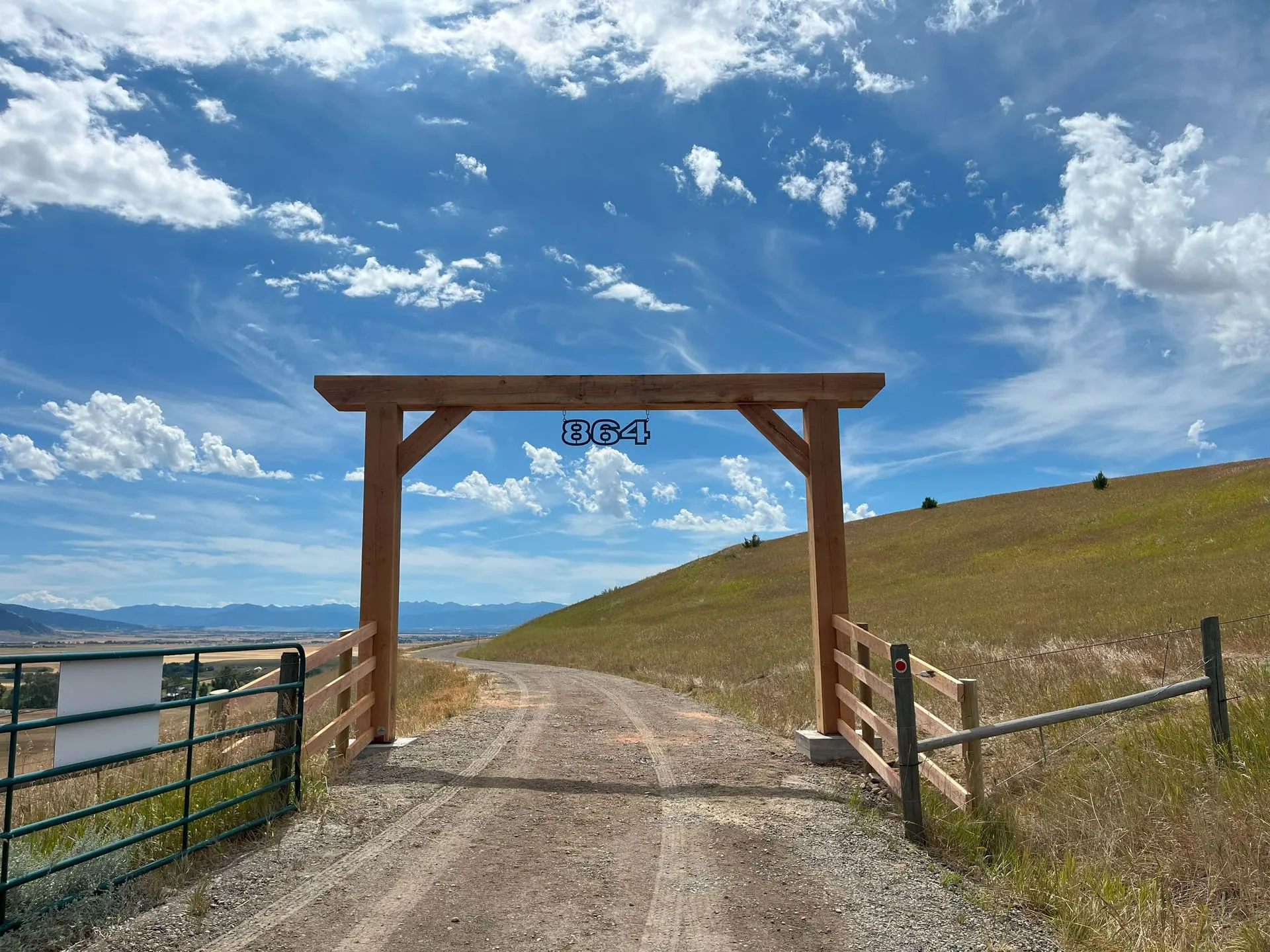 A timber archway with cut-steel address numbers hanging from the beam, easy to spot from the road.
It is part of the look of the West
Arches over ranch gates have been part of the Western landscape for a long time, built from whatever was at hand: logs cut nearby, sawn timber, and later welded steel and pipe. Over the years that silhouette of two uprights and a beam across the drive became shorthand for “this is a ranch.”
People still build them for that reason. A log archway reads rustic and classic, a square timber arch looks clean and finished, a steel or pipe entrance suits open country and working operations, and stone columns add weight and permanence. Our custom archways page shows the range, and the log, steel and stone comparison lays out the trade-offs.
It frames the gate and ties the entrance together
An arch gives the gate, the fence and any cattle guard something to connect to. Gate posts become part of the structure instead of standing on their own, and side fencing can step down from the uprights so the whole frontage looks planned. If you want an automatic gate, the arch posts are a natural place to mount the operator and run power or a solar panel.
What makes a ranch arch work
A ranch arch is a tall frame standing alone in open ground, so a few practical points decide whether it lasts.
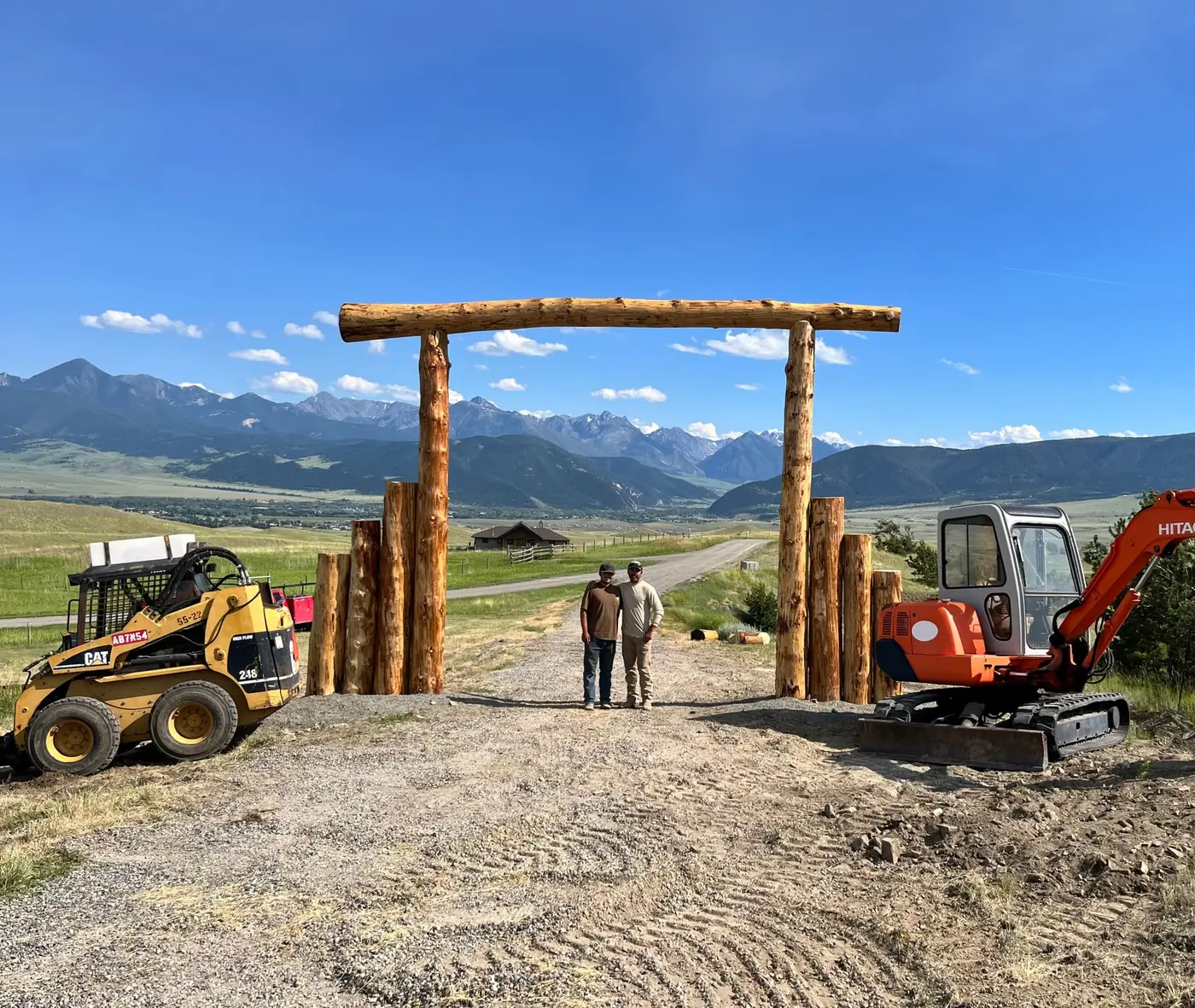
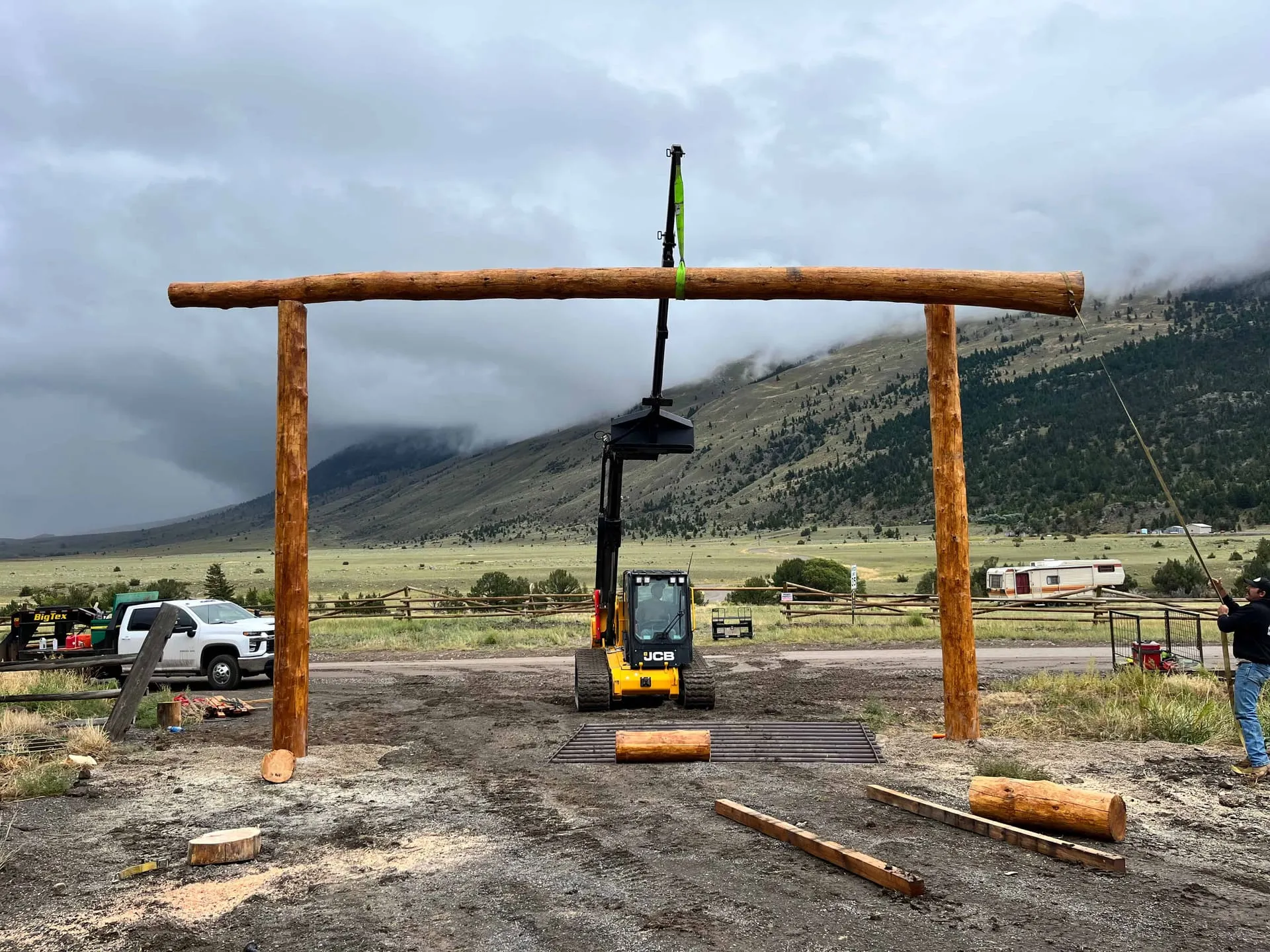 Setting the crossbeam on a log arch. Clearance is locked in the moment this beam goes up.
Clearance for the tallest equipment. Set the height of the beam and any hanging sign by the tallest load that will ever come through: a loaded hay truck, a stock trailer, a camper, a plow truck with its blade raised. It is not the tallest vehicle you own today. Once the beam is set, the height is fixed, and an arch that is a little too low is a permanent problem.
Footings below frost depth. Every upright needs a footing that reaches below the frost line. Frost heave works a shallow post up and sideways, and on an arch the lean shows from the road and racks the beam. Our post on frost depth and footings explains why this governs everything we build.
Wind on the sign. A large sign catches wind like a sail. Chains, brackets and mounting points need to be sized for gusts, not just the sign’s weight, and the posts and footings carry that load too. Open, cut-through designs let more wind pass than a solid panel, which helps on exposed ground.
Water and snow. Wood details should shed water instead of trapping it, and the base should drain away from the posts. Think about where plowed snow will pile so it does not bury the base of a column or block the gate.
Working through these before the build is what our arch design process is for, and our guide to planning a custom ranch entrance covers siting, setback and phasing.
Do you need one?
No property needs an arch to function. But if you want the entrance to be easy to find, to carry your name or brand, and to look like it belongs on the land, an arch is the simplest structure that does all of that at once.
We design and build ranch arches anywhere in Montana, and for larger custom archways we also travel to neighboring states. If you are thinking about one, start an archway estimate or call (406) 551-6772 and we will walk the entrance with you.