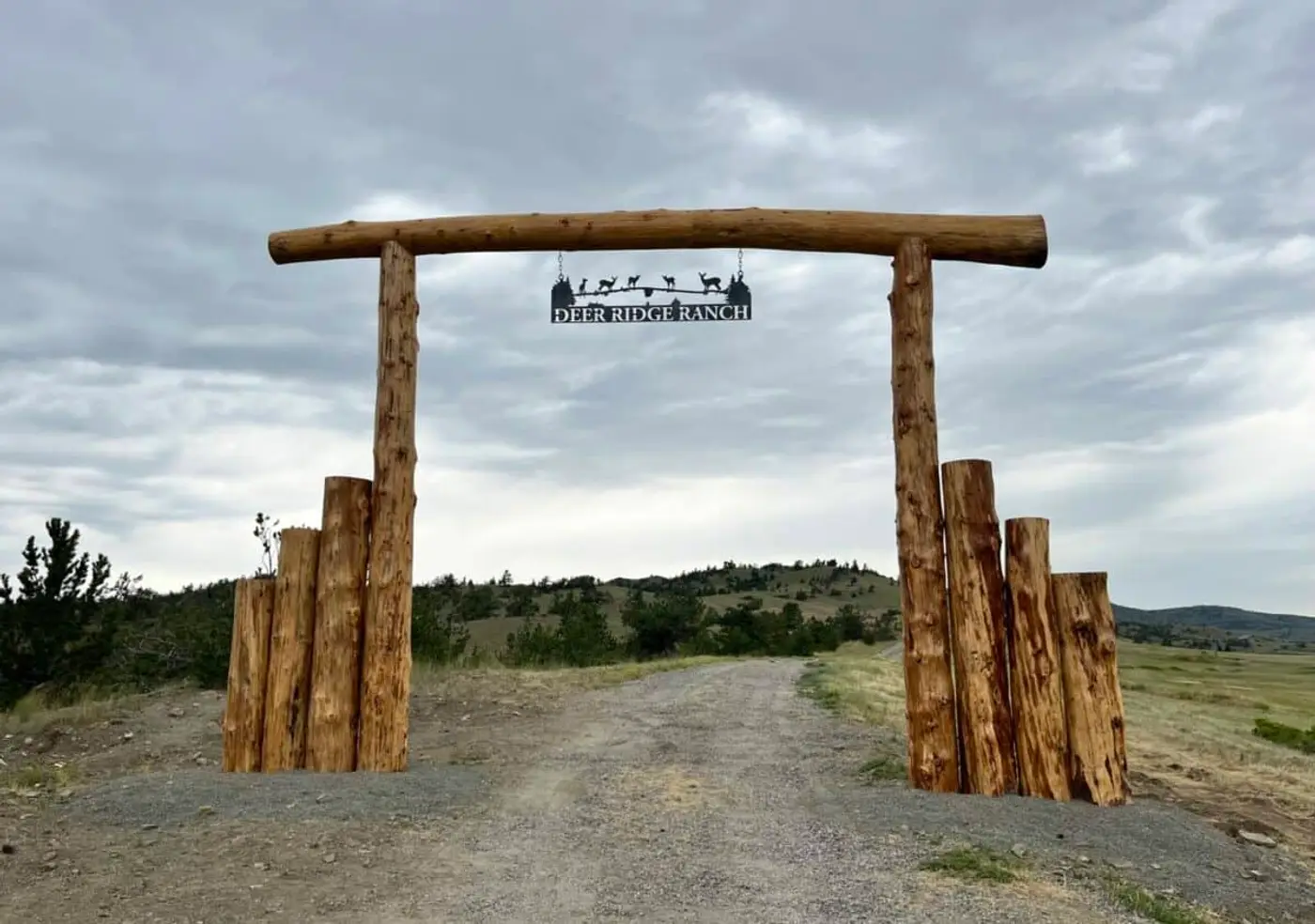
A well-built log ranch archway can stand for decades, and what decides how many is water. Wood that stays dry doesn’t rot. The places where water collects and lingers are the base of each upright, the top of the beam, the joints, and the log ends, and those are where an arch wears out first. Keep them drying out after every storm and the arch will outlast several coats of stain.
Here’s what’s normal, what to check, and how to tell when it’s time to start planning the next one.
The short answer
- Cracks (checks) are normal. They come from drying and don’t mean the log is failing.
- The base is the weak point. Soil, splash, and snowmelt keep the bottom of a post wet. Wood held up on concrete or steel, with drainage away from it, lasts far longer.
- Re-stain when water stops beading, usually every few years, with the sunny south and west faces first.
- Walk the arch once a year, ideally in late spring: probe the base, look at the top of the beam, check the sign hardware.
- Replace, don’t patch, when the wood is soft at the base or the joints, or the arch is leaning or sagging.
How long does a log archway last?
There’s no single number, because the same log can last a lifetime or rot out in a decade depending on how wet it stays. The USDA Forest Products Laboratory’s Wood Handbook is plain about this: serious decay happens only when wood is wetter than its fiber saturation point, roughly 30% moisture content. Wood wetted by rain, condensation, or contact with wet ground can get there; wood kept air dry, around 20% or less, won’t decay, and decay already present stops progressing.
Species matters too. In the handbook’s heartwood decay-resistance table, western redcedar is rated resistant, Douglas-fir and western larch moderately resistant, and the pines not listed elsewhere in the table, which includes lodgepole, slightly or nonresistant. The sapwood of essentially every species has low resistance, and the handbook notes that resistance can be lower still in ground contact. That’s why a lodgepole arch depends so much on design details that keep it dry.
| Part of the arch | What works on it | What to check |
|---|---|---|
| Base of each upright | Soil contact, splash, plowed snow, snowmelt | Soft wood when probed, dark staining, gaps at the footing |
| Top of the beam | Snow sitting on it, water in upward-facing checks | Checks that hold water, soft spots, moss or dark streaks |
| Joints and log ends | Water wicking into end grain | Soft wood around bolts and joinery, open seams |
| Finish | Sun and rain, worst on south and west faces | Water soaking in instead of beading, fading, bare wood |
| Sign hardware | Wind and constant motion | Worn chain links, opened hooks, loose bolts |
Are cracks in my log archway a problem?
Mostly no. Wood shrinks roughly twice as much along the growth rings as it does across them, and the University of Tennessee Extension publication Wood Protection for Log Home Owners explains that this uneven shrinkage makes checks impossible to prevent in logs. Logs usually open one large check rather than several small ones, and the check may keep widening for a few years as the log dries.
A check deserves a closer look when:
- It faces up. A check on the top of the beam collects rain and snowmelt, which freezes and thaws in it all winter. Wood that stays wet is wood that can decay.
- It runs through a joint or a bolt hole, where it can loosen the connection.
- The wood inside is soft or dark, instead of clean and hard.
Side and bottom checks shed water and can be left alone. On upward-facing checks, some owners use a flexible sealant made for log checks. Don’t seal a check that’s still actively opening, and don’t trap water behind a seal.
How often should a log archway be re-stained?
When the finish stops doing its job. Tennessee Extension puts the normal lifetime of exterior finishes at six months to a few years, recommends checking them once a year, and suggests a simple test: sprinkle water on the wood, and if it soaks in instead of beading, refinish. A Purdue Extension bulletin co-written with the Forest Products Laboratory, Selection and Application of Exterior Finishes for Wood, gives a first coat of semitransparent penetrating stain on new wood 2 to 4 years, notes that later coats tend to last longer, and points out that faces in full sun and rain wear out first, especially on the south and west.
On an arch, that usually means the beam and the sunny face of each post need attention before the rest. Penetrating stains wear away gradually, so the upkeep is simple: brush off dirt and loose fibers, let the wood dry, and recoat over the old finish on a dry day within the temperature range on the can.
Leaving the arch unfinished is a fair choice. Tennessee Extension notes that weathering alone removes only a fraction of an inch of wood per century. The gray color is cosmetic. Water that stays in the wood is what shortens its life.
Why the base of a log post rots first
The bottom couple of feet of an upright gets wet more often and stays wet longer than any other part of the arch. Soil holds water against it, rain splashes it, the plow piles snow against it, and spring melt soaks it. Every one of those keeps the wood above the moisture level where decay starts.
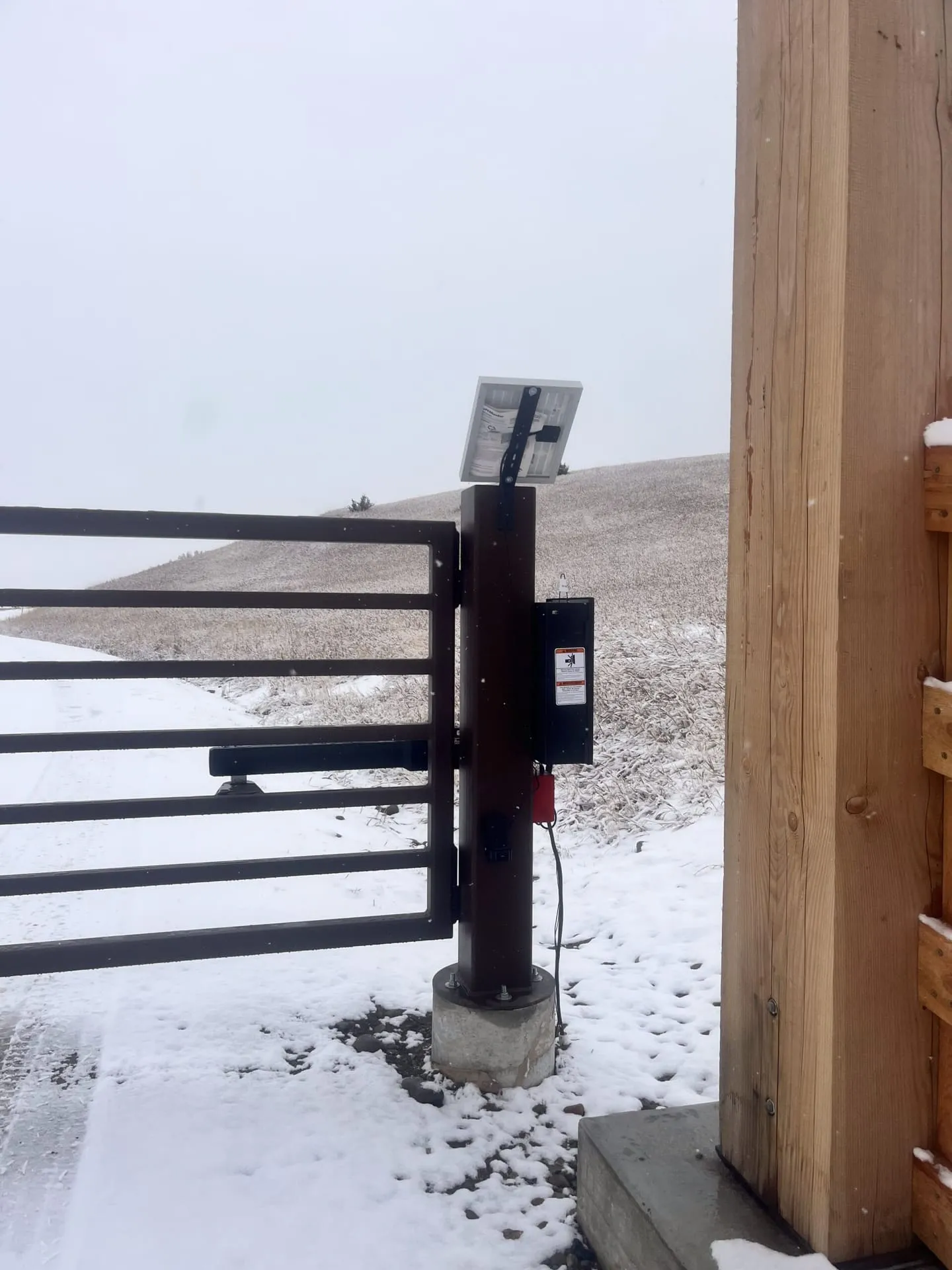 A timber post standing on a raised concrete base, which holds the wood up out of the soil, splash, and snowmelt.
That’s why the way the posts meet the ground matters so much:
- Wood held above grade on a steel bracket or base plate atop a concrete pier never touches soil, and the end grain at the bottom can dry.
- A steel sleeve or socket set in a concrete footing carries the post while keeping its base out of the dirt.
- Posts set in concrete need the top of the concrete shaped to shed water away from the wood. A flat or cupped collar holds a ring of water right where the wood is most vulnerable.
Whatever the detail, every upright needs a footing below frost depth, or heave will lean the arch long before rot does. Our frost depth guide explains why.
Owners can help the base a lot:
- Keep the ground sloping away from each post. Don’t let soil, bark mulch, or sod build up against the wood.
- Use gravel, not soil, right around the base.
- Plow so snow isn’t piled against the uprights. A berm against a post is a slow soak every spring.
- Aim sprinklers and irrigation away from the arch.
Snow on the beam
A round log beam sized for its span carries ordinary snow without trouble, and much of it slides off. The problems come from details that hold snow: a flat-topped beam, a cap, a sign mounted on top of the beam, or ice building up over a check. Heavy, wet spring snow is the load to watch.
If a big load is sitting on the beam, knock it off from the ground with a long pole if you can do it safely. Don’t climb the arch. After a heavy winter, sight along the bottom of the beam for any new sag.
Wind and sign hardware
A hanging sign moves every time the wind blows, and on open ground around Livingston or Big Timber that’s most days. Metal-on-metal wear thins chain links and the eye bolts they hang from, S-hooks slowly open, and bolts through the beam loosen as the wood dries and shrinks. Once a year, look at each link where it bears on the next, close any open hooks, snug the bolts, and make sure the sign can’t swing into the beam or the posts. Replace a worn chain before it lets go.
Inspecting for rot and insects
Walk the arch with a screwdriver or an awl. Push it into the wood at the base of each upright, at the joints, and on top of the beam if you can reach it safely. Sound wood resists; decayed wood is soft and punky, and the tip sinks in. Tapping with a hammer helps too: decayed wood sounds dull compared with sound wood.
Insects tell you about moisture:
- Carpenter ants nest in wood rather than eat it, and they prefer wood that’s soft or already softened by decay. The Forest Products Laboratory notes their presence often points to a moisture problem. Look for piles of fine sawdust with insect parts below an opening.
- Carpenter bees bore clean, round half-inch holes. Tennessee Extension notes that typical log finishes don’t stop them, and repeated use of the same galleries over the years can do real damage.
- Bark beetle galleries under the bark usually date from when the tree was standing. Tennessee Extension notes these beetles won’t reinfest the logs, so the galleries don’t by themselves mean active damage.
If you’re not sure what’s in the wood, an Extension office can help identify it.
When to plan a replacement
A finish refresh and good drainage cover most years. Some problems are past that:
- Soft wood at the base that goes deeper than the surface
- An upright leaning more each year
- A beam that sags or has rot at the joints
- Insect damage with soft wood around it
When one upright has rotted at the base, the other has had the same years of the same exposure, so it usually makes sense to plan the whole arch rather than one post. That’s also the moment to change what’s touching the ground. A replacement can put the wood up on stone or steel bases, which takes it out of the splash zone entirely. Our log archways page shows how we build them, and the entrance planning guide covers clearance and setback if the drive has changed since the first arch went up.
Steel and stone: what upkeep looks like instead
Steel. A steel or pipe entrance doesn’t rot. Its upkeep is the coating: touch up chips in paint or powder coat before rust gets under them, or let raw steel weather to a rust-brown patina. Check that water can’t sit inside tubes or on base plates, and look over the welds and bolts.
Stone. Stone columns have no refinishing cycle. Watch mortar joints, especially on top of caps, because water in a cracked joint freezes and pushes it open. Caps should shed water off and away from the column. The footing still has to be below frost depth, because a settled column can’t be shimmed.
Our comparison of log, steel, and stone entrances lays out the trade-offs side by side, and why ranches have arches covers what makes any arch work.
If you’re starting to plan a replacement, the ranch entrance designer lets you pick a log, timber, steel, or stone style, a sign, a gate, and clearance before anyone digs. When you’re ready, start an archway estimate or call (406) 551-6772.