Gallatin County
Horse Fencing in Gallatin Gateway
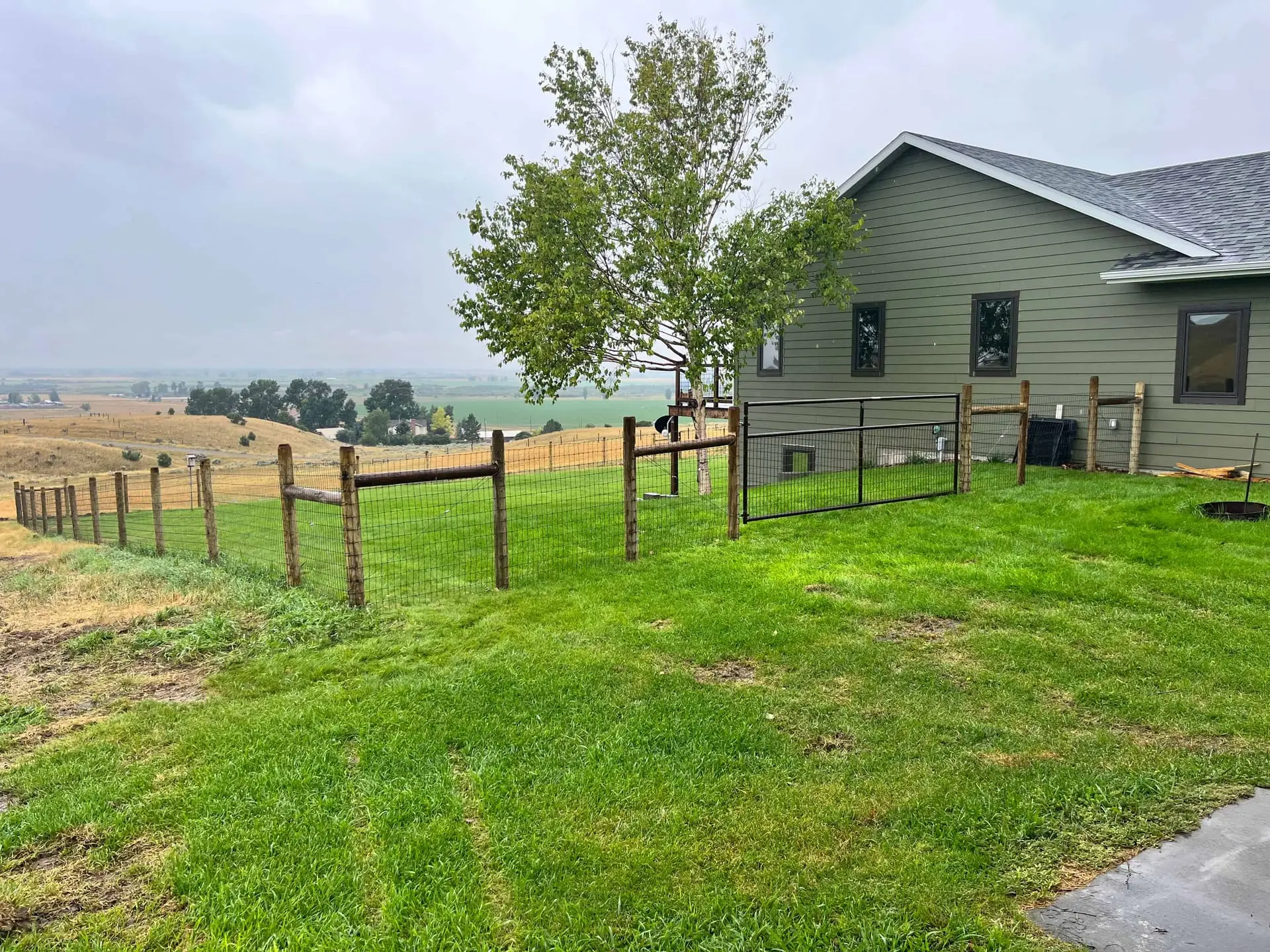
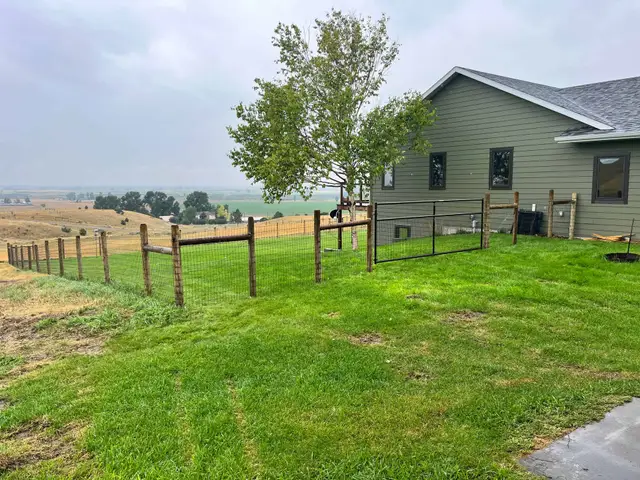
Gallatin Gateway is horse country, so a fence here is judged first by how safe it is for horses: one they can see, cannot put a foot through, and will not get hurt on if they run into it.
That usually means no-climb mesh with a top rail or board on the perimeter, and board or smooth steel in the places horses crowd: paddocks, gates, alleys and round pens. We keep barbed wire off horse lines.
The ground adds its own problems. Toward Four Corners it is flat and diggable, but as the valley narrows toward the canyon the slope and rock pick up, and some lines need jackleg where a post driver will not go.
Local Conditions
What Changes for Fencing in Gallatin Gateway
Horses need to see the line
Horses run fence lines, often at speed and sometimes in low light. A top rail or board over mesh, or a full board or rail fence along paddocks, gives them a clear edge to read before they reach it.
Rock where the valley narrows
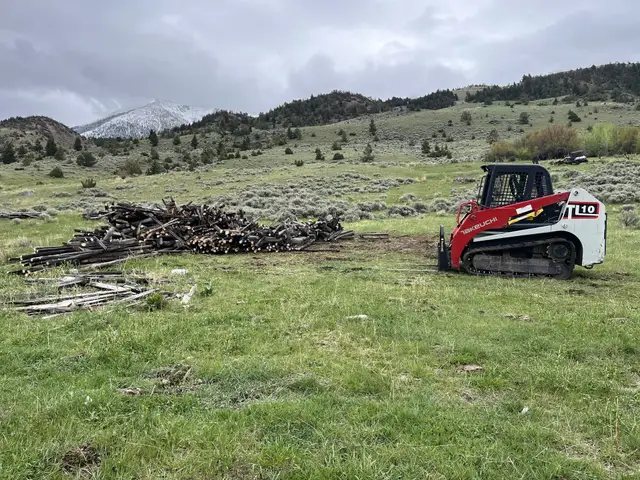
Closer to the canyon, posts start hitting rock and slope. Jackleg crosses that ground without post holes, and mesh can be added along it where foals or small horses could slip between rails.
Canyon wind on gates and long runs
Air coming out of the canyon puts steady load on wide gates and long paddock runs. Gates get hung and latched so they do not swing on their own, and mesh stays tight only when the corners and braces are built for it.
Worn ground at gates and fence lines
Horses wear trails along fence lines and pack the ground at gates and waterers. Where that ground turns to mud each spring, building up the base at the gate before the fence goes in prevents a leaning gate post and a gate that drags.
Options That Fit
Fencing We Build Around Gallatin Gateway
No-Climb Fence
The safe perimeter and pasture fence for horses, usually topped with a rail or board for visibility.
Ranch Board Fence
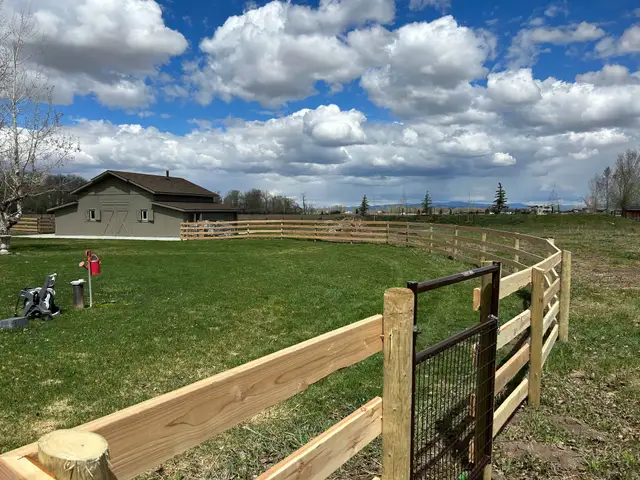
Paddocks and road frontage where horses need to see the fence and owners want the classic look.
Round Rail Fence
A uniform rail fence for driveways and paddocks on the flatter ground north of the canyon.
Continuous Panel Fence
Round pens, arenas and small corrals in smooth steel with no hardware for a horse to catch on.
Jackleg Fence
Rocky and sloped lines near the canyon mouth where posts will not go in.
Dowel Rail Fence
A joined rail fence for entrances and frontage, with no fasteners to work loose as horses lean on it.
See every option on the All fence types page.
Gallatin Gateway Fencing Questions
What is the safest fence for horses in Gallatin Gateway?
No-climb mesh with a top rail or board is where we start for most perimeter and pasture lines. It has no openings a hoof can pass through and nothing to climb, and the top rail gives horses a line they can see. In paddocks and pens where horses crowd, board or smooth steel panel takes over.
Can you fence a horse pasture on rocky ground?
Yes. On the rockier ground toward the canyon we use jackleg, which sits on the surface, and add mesh where foals or small horses need it. Where only part of a line hits rock, we switch methods for that stretch and keep the rest on driven posts.
Should a horse fence have barbed wire?
We do not recommend it. Barbed wire causes serious cuts when a horse runs into it or gets tangled, and safer options hold horses just as well. If a horse pasture still has old barbed wire, replacing it is often the first fence project worth doing.
Do you build round pens and arenas too?
Yes. We build round pens, arenas and small corrals from welded continuous panel, and tie them into the pasture fence and gates around them. The ground underneath is part of the job, since a pen that stays soft or muddy is hard to use.
Keep Exploring
More Around Gallatin Gateway
Fencing in Other Towns
Free Estimates & Measurements · Bozeman, MT
Let's walk your Gallatin Gateway property
Site visits and estimates are free. We'll tell you what the ground and the job actually call for, including when that is less than you expected.