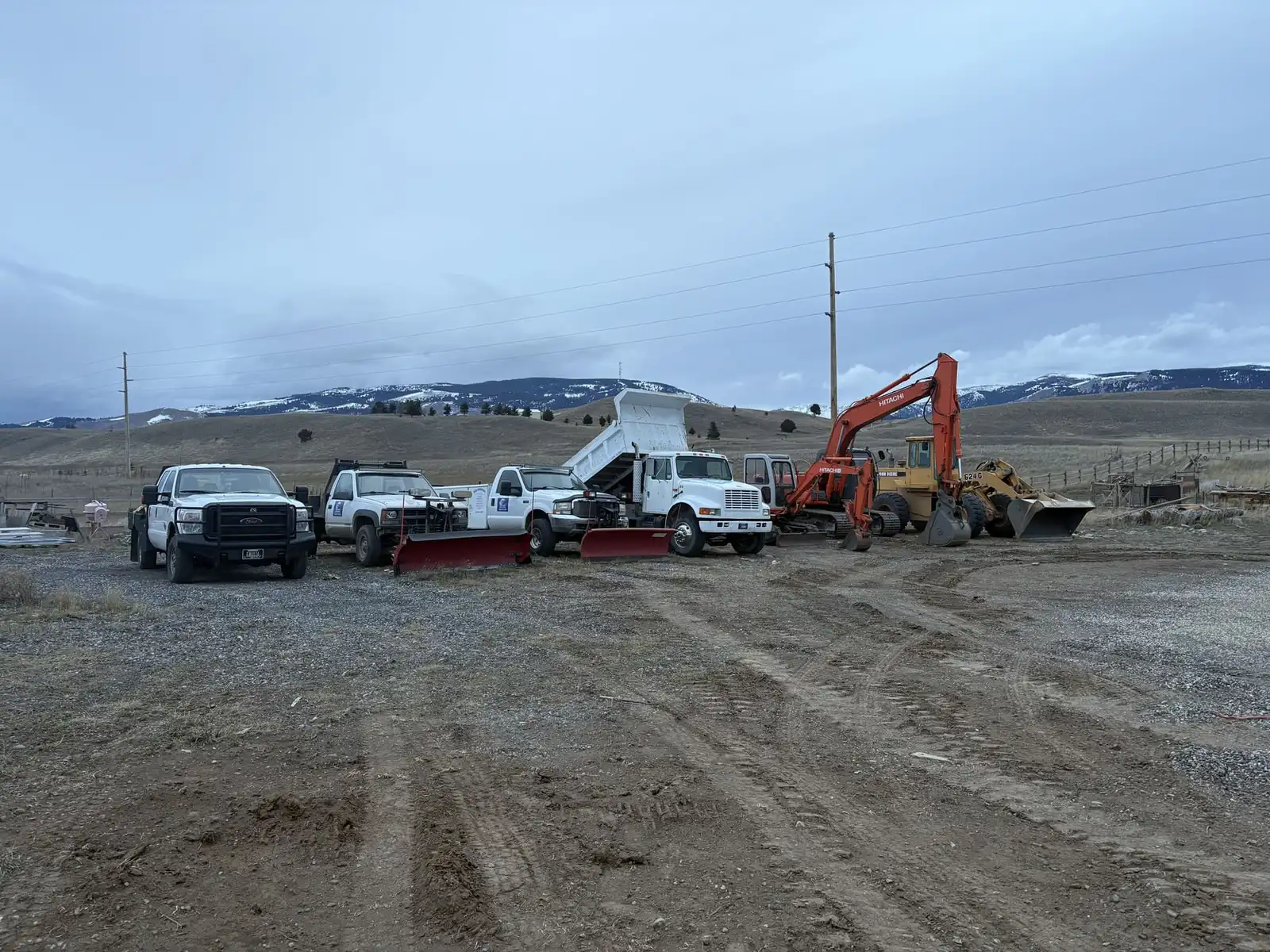
Yes, We Repair Gates We Didn’t Build
We’ll be straight about this up front: most of our gate work is building new automatic gates and complete ranch entrances. Repairing other people’s gates isn’t our usual work. But we do take it on, because a lot of the failing gates we see around Bozeman, Livingston, and Paradise Valley aren’t broken so much as built in a way that was never going to survive a Montana winter.
So our approach is simple. Find out why the gate is failing. Repair it when a repair will actually hold. And when the gate or the operator is failing because of how it was built, tell you that plainly and rebuild it properly instead of patching it every January.
What We Look At First
A gate that won’t open is a symptom. The cause can be almost anywhere in the system, and the cheapest fix is the one that addresses the real problem. On a repair visit we work through:
- Posts and footings. Is the hinge post or column still plumb? Has it moved since it was set? A post that tilts even slightly changes the gate’s geometry and the operator fights it on every cycle.
- The gate itself. Sag, bent frames, worn or undersized hinges, and latches that no longer line up.
- The operator. Is it sized for the gate’s weight and length, and for wind? Is it mounted where the geometry works, or was it fitted to whatever was already there?
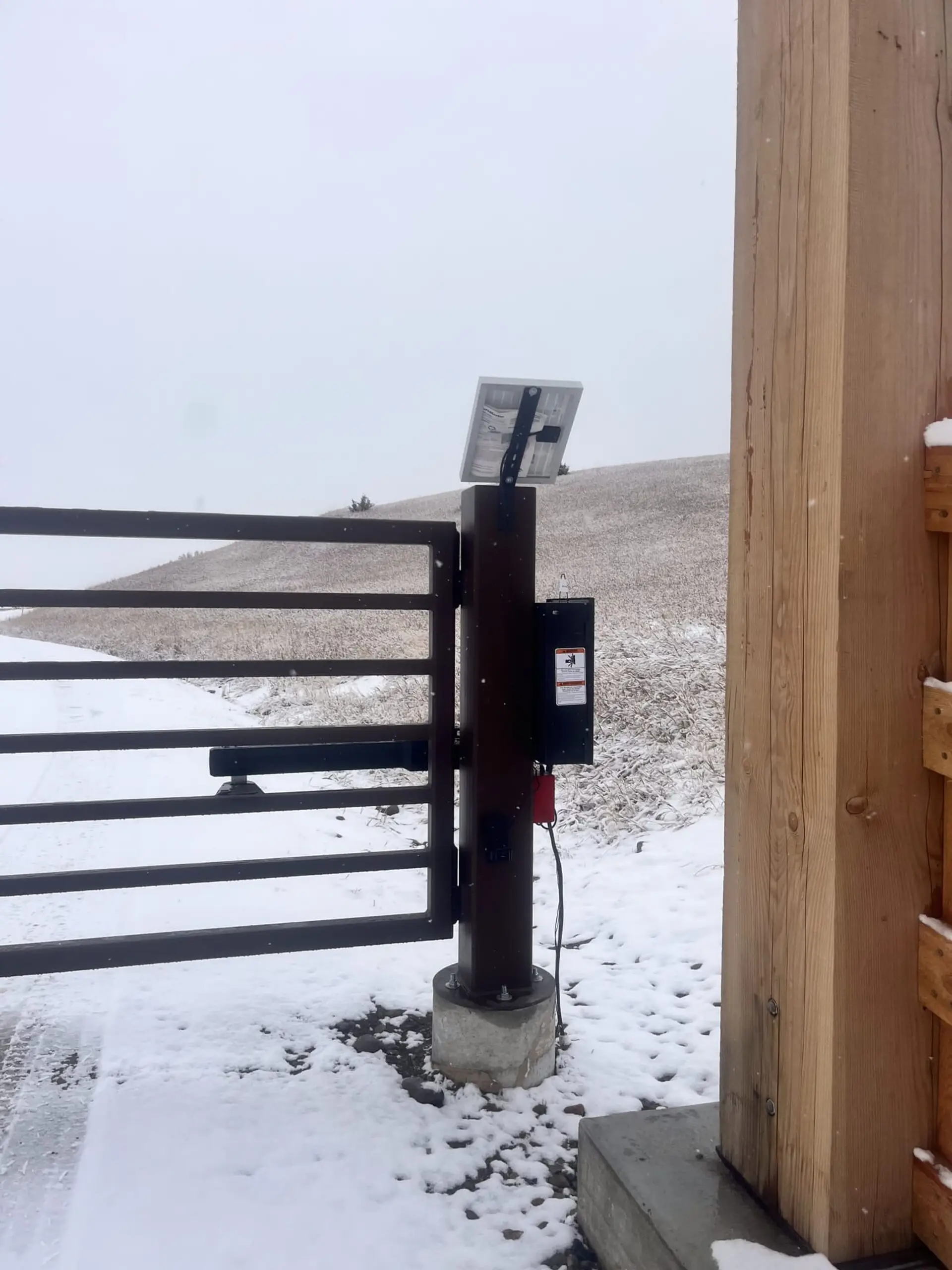
- Power. Grid supply, wiring runs, and on solar gates, the panel, battery, and where the panel sits relative to winter sun and snow.
- Safety devices and access controls. Sensors, safety edges, keypads, remotes, and receivers that have been knocked out of alignment or have simply quit.
- Drainage and snow. Water pooling at the pivot that turns to ice, and plow berms or drifts that block the gate’s path.
Common Montana Gate Failures
The same handful of problems shows up again and again:
- Frost-heaved posts. The gate works in summer, drags or won’t latch in winter, then recovers in spring. That seasonal pattern is the signature of a footing set above frost depth. Our frost depth guide explains why it happens.
- Sagging gates. Light hinges and thin bracing carrying a heavy steel gate plus winter ice load. The gate drops, drags, and pulls the operator out of line with it.
- Undersized operators. An opener rated “up to” a gate’s weight on paper, working at its limit on a long leaf in the wind. It wears out early, and replacing it with the same unit just starts the clock again.
- Solar sized for summer. A system that runs fine in August and goes flat in December’s short, gray days. See when solar gates work in Montana.
- Ice at the pivot. Poor drainage at the base of the gate becomes ice at the base of the gate.
- Blocked arcs. A swing gate opening into the plow berm or the drift line is a manual gate for the winter.
When Repair Makes Sense
If the posts are plumb, the footings are sound, and the operator is matched to the gate, most problems are honest repairs: a worn component, an adjustment, a misaligned sensor, a bent frame, a hinge that needs replacing. Our welding crew handles gate frame and hinge repairs on-site, which matters when the steel is already hanging where it needs to be. Sound gates and posts can usually keep working with the right fix.
When Rebuilding Is the Honest Answer
Some gates fail because of decisions made the day they went in. When that’s the case, repairing the visible part just schedules the next failure. We recommend replacing or rebuilding when:
- The footings are shallow. Posts that heave every winter need to be reset on footings below frost depth. No operator adjustment survives a post that moves.
- The operator is undersized. A gate that is too heavy, too long, or too exposed to wind for its operator needs a properly sized operator, or a gate built to suit the operator it has.
- The power was never adequate. A solar system that can’t keep up in winter needs honest sizing and placement, or a grid connection. Running power to a gate is utility trenching, and we do that work too.
- The gate type fights the site. Sometimes a swing gate is simply in the wrong place for the snow, slope, or space. Our guide to swing vs. slide gates in Montana covers how the site should pick the gate.
When a rebuild is the right call, we build it the way we build new automatic gates: deep concrete footings, reinforced posts, cold-rated operators, correct drainage, and a professional automation setup. If you want to go further, we can rebuild the whole entrance, archway and columns included.
Before You Call
A few things help us understand the problem quickly:
- What the gate does, or doesn’t do, and when it started
- Whether it changes with the season or the temperature
- How it’s powered: grid, solar, or not sure
- Whether the manual release still works
- Photos of the gate, the operator, and the posts where they meet the ground
You don’t need to know the cause. That’s our job.
Get Your Gate Looked At
If your automatic gate is stalling, sagging, or quitting every winter, we’ll find out why and give you a straight answer on whether to repair or rebuild it. We work around Bozeman, Livingston, and Paradise Valley, and for ranch entrances we travel farther across Montana. Start a gate request and describe the problem in your project notes, or call (406) 551-6772.